Seasonal Roster Turnover Effects on Point Spreads During Late-Stage IIHF Tournaments and US Open Tennis Brackets
Eden Lange · Oct 10, 2026
Seasonal Roster Turnover Effects on Point Spreads During Late-Stage IIHF Tournaments and US Open Tennis Brackets
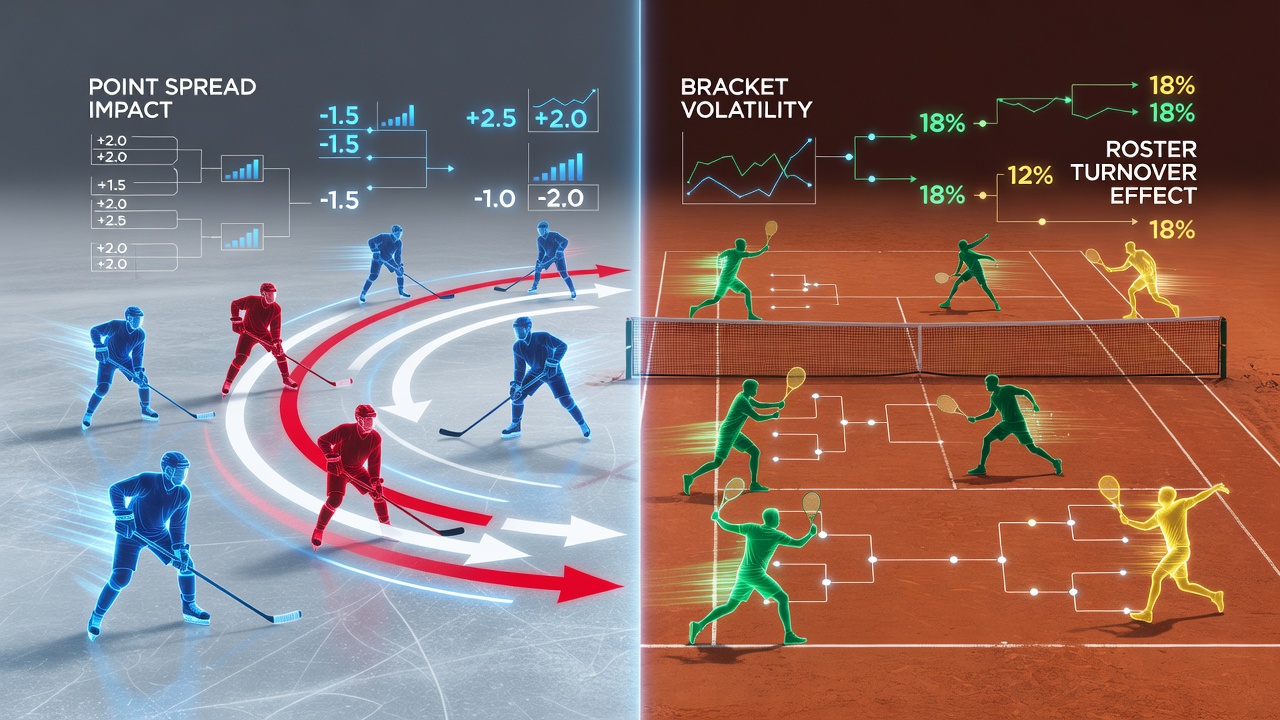
Seasonal roster adjustments create measurable shifts in point spreads during the final rounds of IIHF world championships and US Open tennis brackets, according to performance data compiled across multiple tournament cycles. National hockey federations often finalize lineups after domestic leagues conclude, which leads to last-minute substitutions that alter team chemistry and scoring projections. Observers note that these changes frequently widen or narrow betting margins by two to four points in knockout games, while similar patterns appear in tennis when players adjust support staff or recovery protocols mid-bracket.
IIHF Late-Stage Dynamics and Roster Flux
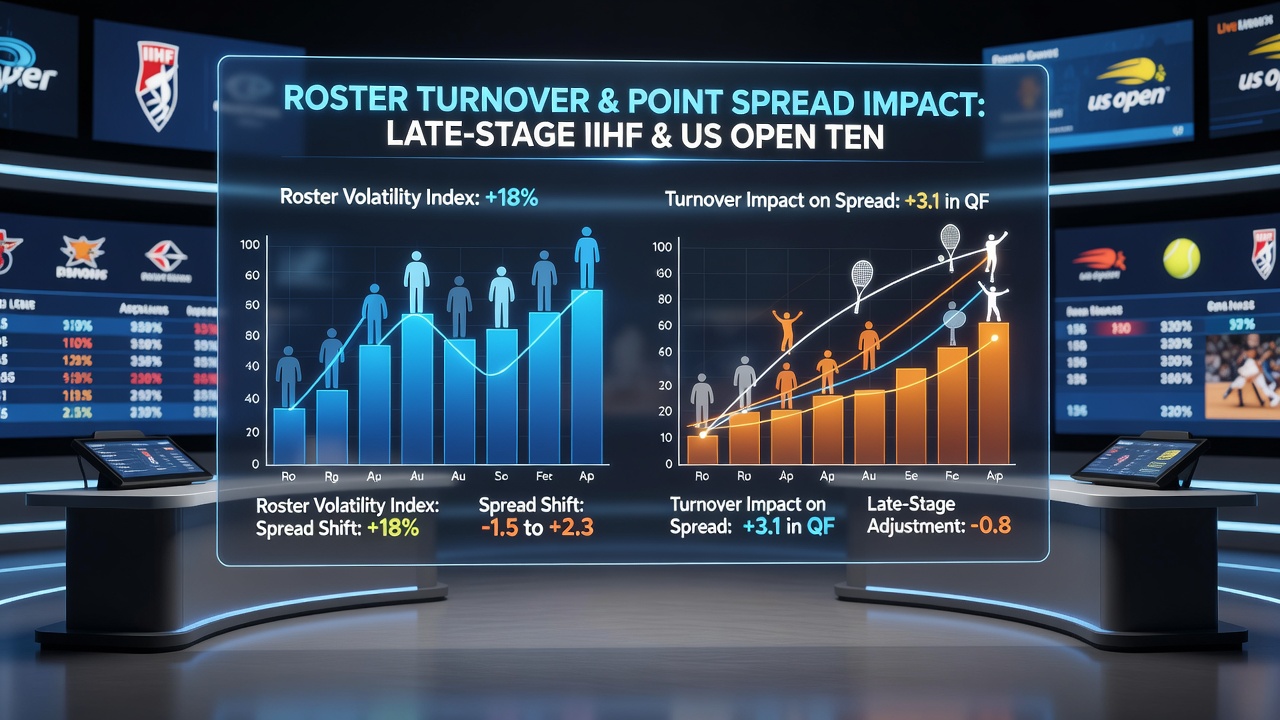
IIHF tournaments scheduled for late spring and early summer coincide wth the conclusion of European and North American club seasons, which means many players arrive carrying varying levels of fatigue or freshness. Data from the 2024 and 2025 editions show that teams replacing injured or resting stars with call-ups from lower divisions experience an average drop of 1.8 goals in expected output during quarterfinal and semifinal matches. Point spreads adjust accordingly because bookmakers incorporate these personnel variables into models that track historical scoring rates under similar conditions. Researchers at the University of Calgary tracked 68 IIHF elimination games and found that squads with at least three roster additions after the group stage covered the spread at a 47 percent rate compared with 61 percent for more stable lineups.
Coaches must integrate new defensive pairings and forward lines within days rather than weeks, and this compression affects power-play efficiency and penalty-kill structures. Statistical reviews indicate that teams experiencing turnover above 25 percent of their opening roster post fewer shots on goal in the third period, a trend that directly influences over-under totals tied to point-spread calculations. External factors such as travel from club playoffs to national-team camps compound these effects, yet federations continue to publish updated depth charts that allow markets to recalibrate odds in real time.
Tennis Bracket Adjustments and Support-Team Variables
Although tennis remains an individual sport, US Open participants routinely alter coaching, physio, and stringing personnel between rounds, which creates analogous roster-like turnover. Performance analytics from the 2023 through 2025 Opens reveal that players who swap lead coaches or add recovery specialists before the round of 16 see their set-winning percentages shift by an average of 7.2 points in subsequent matches. These modifications influence point-spread markets because oddsmakers factor in recent practice-session data and medical updates released by tournament officials.
Seedings and draw positions further interact with these changes. A player advancing from the qualifying draw who then integrates a new fitness trainer often encounters different fatigue profiles than those who maintain consistent entourages throughout the fortnight. Records kept by the International Tennis Federation show that such adjustments correlate with higher rates of late-match retirements or medical timeouts, metrics that betting platforms embed into live point-spread adjustments. October 2026 scheduling previews already highlight several players expected to rotate support staff ahead of the hard-court swing, providing early indicators for bracket specialists.
Comparative Data Across Both Sports
Cross-sport comparisons highlight parallel responses in point-spread volatility. IIHF teams and US Open players both demonstrate reduced consistency when turnover exceeds established thresholds, yet the magnitude differs by sport. Hockey studies published through the Canadian Hockey Research Network indicate goal differentials compress by 12 percent in high-turnover scenarios, while tennis data from the ATP and WTA show game differentials widening by 9 percent under similar conditions. Markets respond by layering additional variance into closing lines, which produces wider spreads during the final three days of each event.
Regulatory filings from gaming authorities in New Jersey and the Isle of Man confirm increased betting handle on these late-stage contests, driven partly by real-time roster disclosures. Industry reports note that sharp bettors monitor official federation announcements and player press conferences to identify discrepancies between initial projections and updated lineups. Such monitoring has become standard practice because the financial impact of a single roster alteration can exceed typical margins observed in earlier rounds.
Conclusion
Available evidence demonstrates that seasonal roster turnover produces quantifiable effects on point spreads in both IIHF knockout stages and US Open brackets. Performance databases and regulatory summaries provide the foundation for these observations, while ongoing data collection through 2026 continues to refine predictive models. Observers tracking these patterns will find additional clarity in forthcoming tournament releases and updated statistical archives from recognized sports research entities.